
Our story
Queen of Sheba
A restaurant for Ethiopian and Eritrean cooking in Frankfurt am Main.
The name
Where the name comes from
The Queen of Sheba - Makeda - is among the oldest figures connecting Ethiopia with the world beyond the Red Sea. Her story is told in Ethiopia, in Eritrea, in Yemen and across three world religions, each version a little different.
What every version shares is a journey, a welcome, and an exchange of gifts. A fitting name for a house where guests are received.
Our story
How this restaurant came to be
A restaurant rarely begins with a business plan. Usually it begins with a kitchen that has too many people standing in it, and the feeling that what comes out of it should not stay there.
Queen of Sheba grew out of a wish to bring the Ethiopian and Eritrean way of eating to Frankfurt - not as a curiosity, but the way it arrives on the table at home: one large platter, injera instead of cutlery, and as much time as the food happens to need.
We cook nothing that could be shortened. The onions cook down until they are sweet. The berbere is not bought but built. And nobody who sits with us gets their own plate - they get a place at a platter that everyone reaches into.
Where it comes from
The mesob sits in the middle
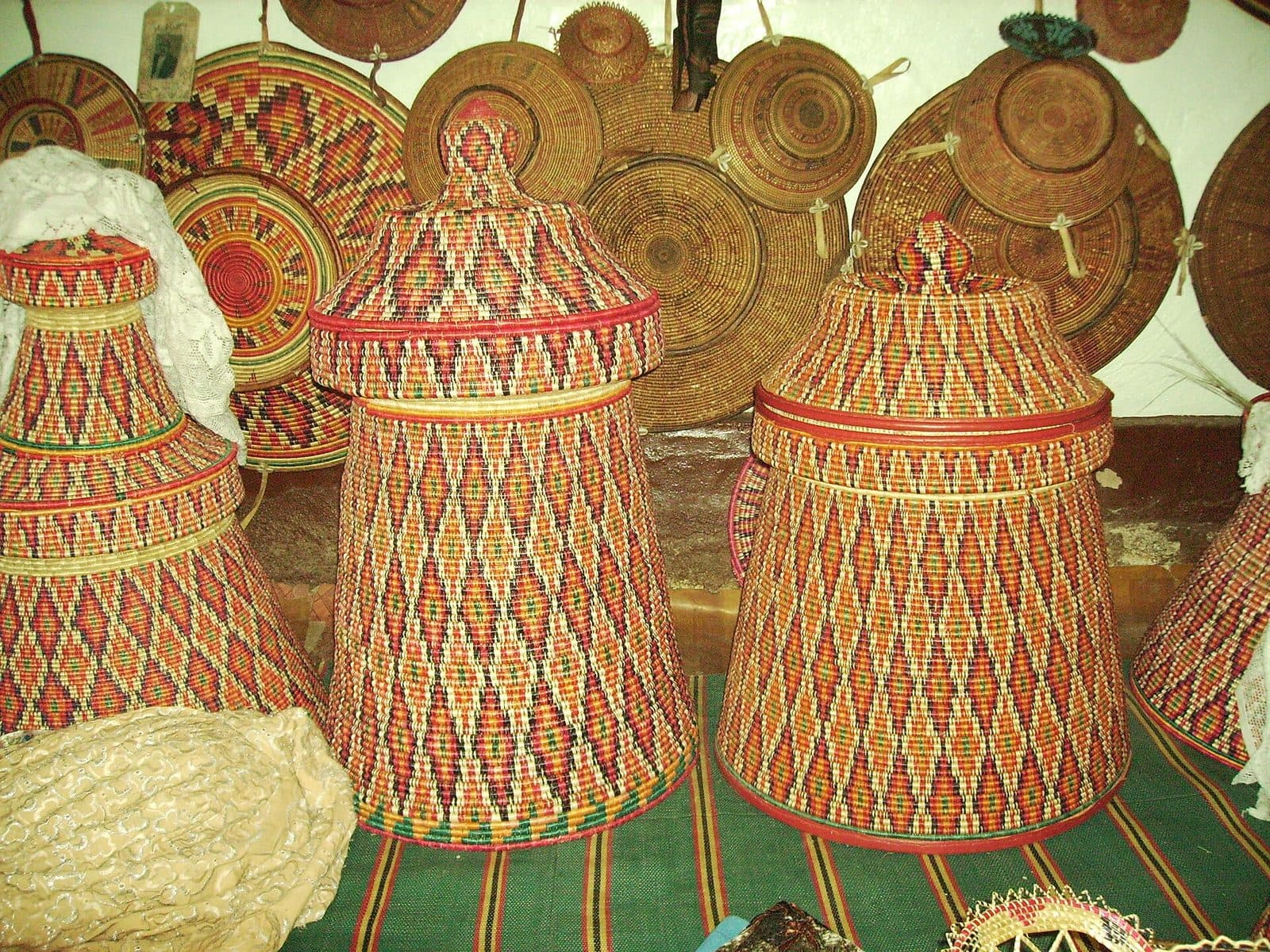
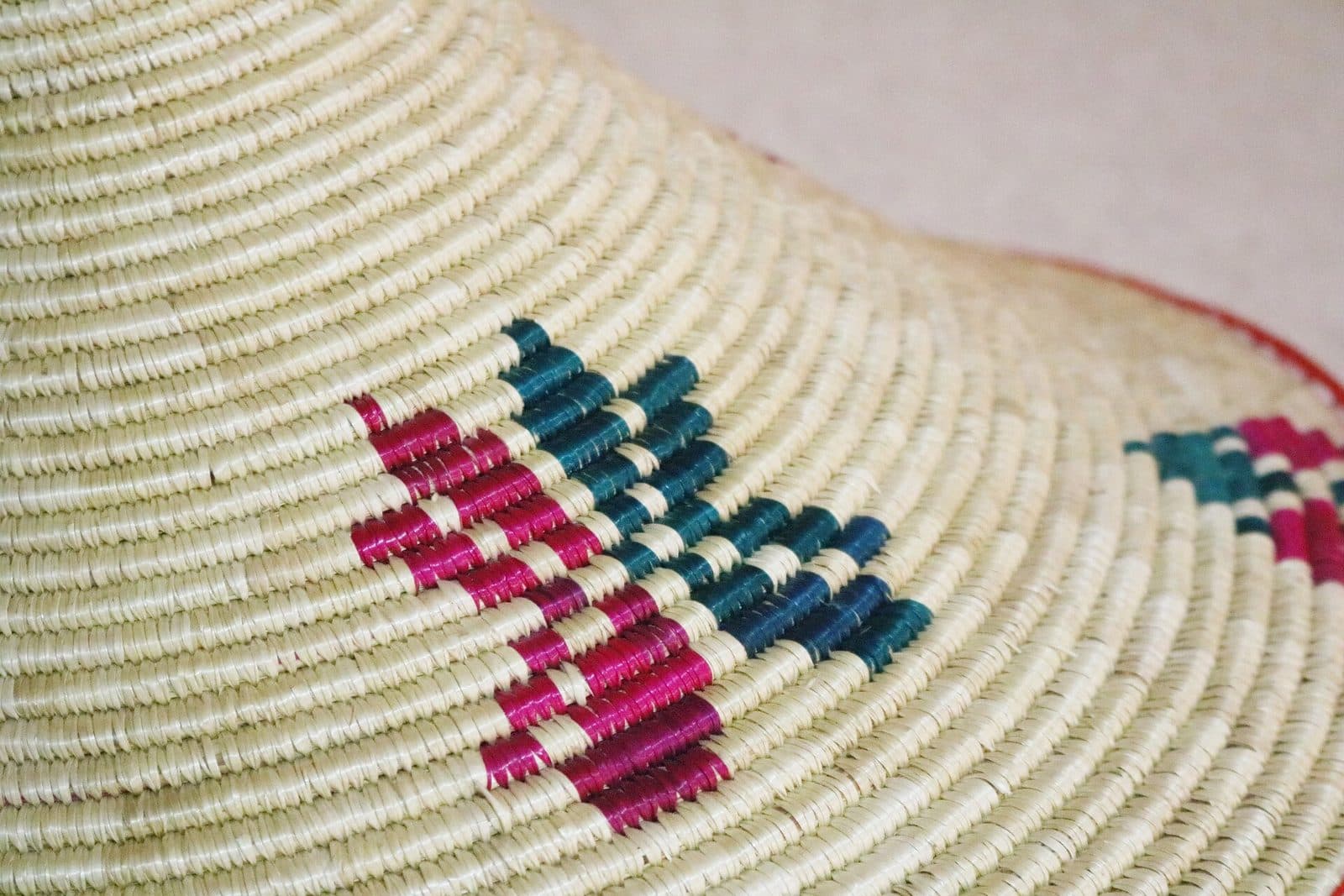
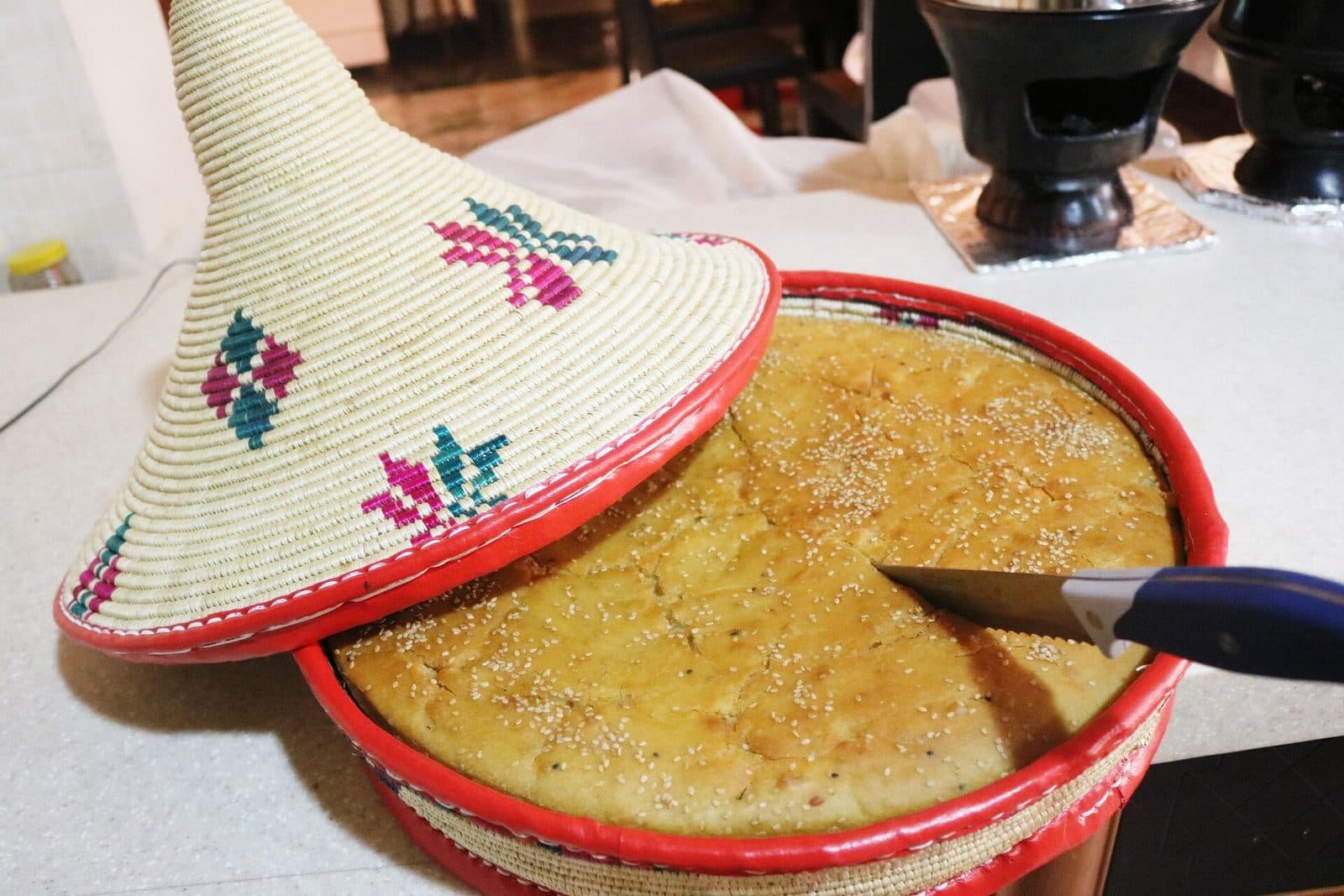
Nothing here gets divided into portions; it gets laid down together. The mesob - the woven basket table - carries one large injera, and onto it goes everything the kitchen has to say that day.
Whoever eats from it eats from the same flatbread as everyone else. That is not folklore. It is simply the way it is done at home.
In the kitchen
What we do not shorten
Berbere is not one ingredient but a blend - chilli, fenugreek, coriander, ginger, cardamom, clove and more. It sets the character of most wots.
Doro wot begins with onions. A great many onions, sweated without fat until they collapse. Only then does anything else go in. It takes hours, and it cannot be shortened without tasting shortened.
Injera needs time to ferment. Kitfo is hand-chopped, not machine-minced. Nitir kibbeh is made, not bought.