
The experience
How Ethiopian and Eritrean food is shared
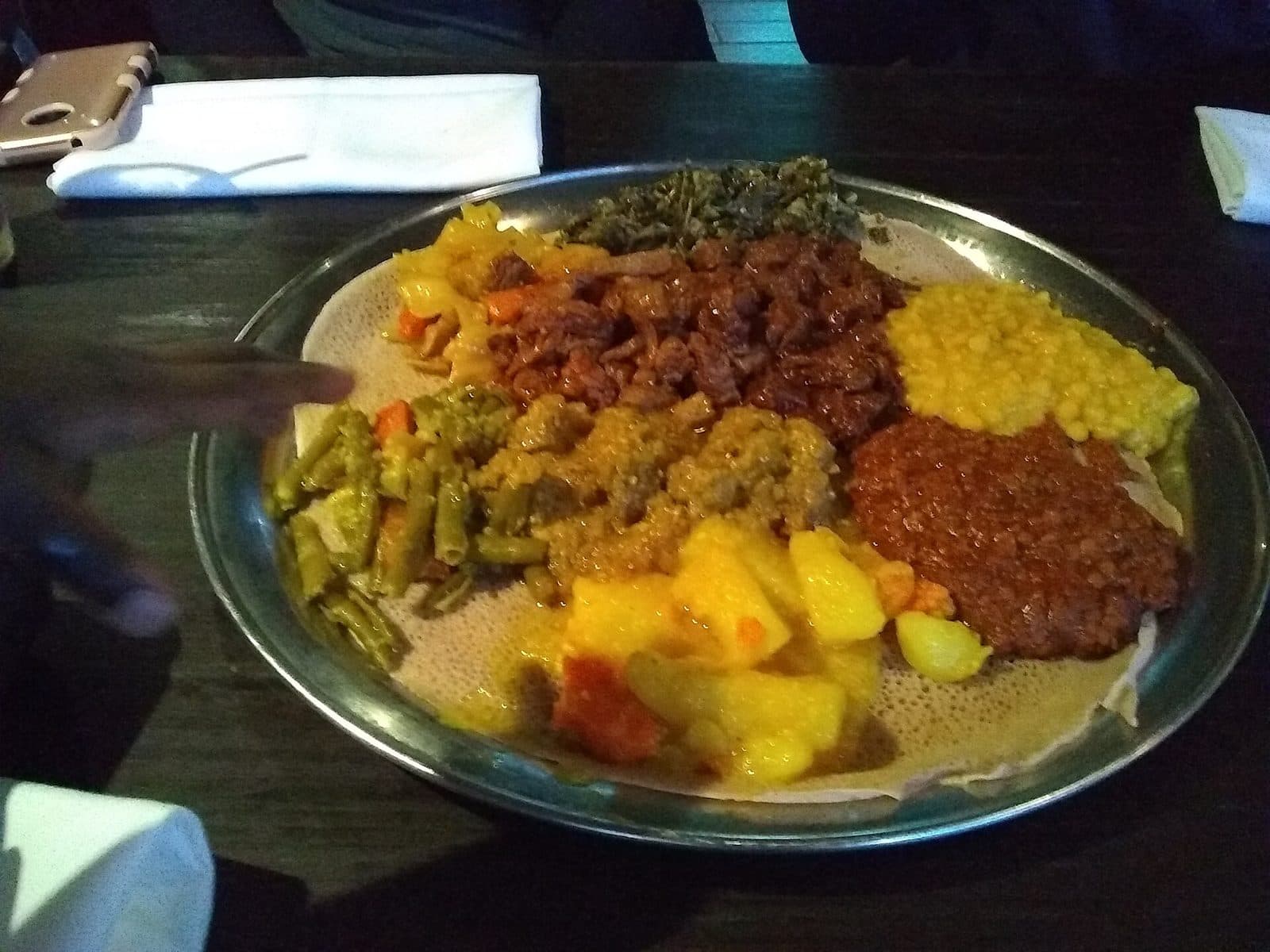
No cutlery, no plate of your own, no courses. A short introduction - so a first visit does not have to start with a question.
Injera
Plate, cutlery and side dish in one
Injera is made from teff, a very fine grain from the Ethiopian highlands. The batter ferments for several days, which gives it its gentle sourness.
It is baked on the mitad, a wide round griddle. Bubbles rise to the surface and leave the characteristic holes - they will hold the sauces later.
By the end of the meal the injera underneath has absorbed everything. Many people consider that piece the best part.
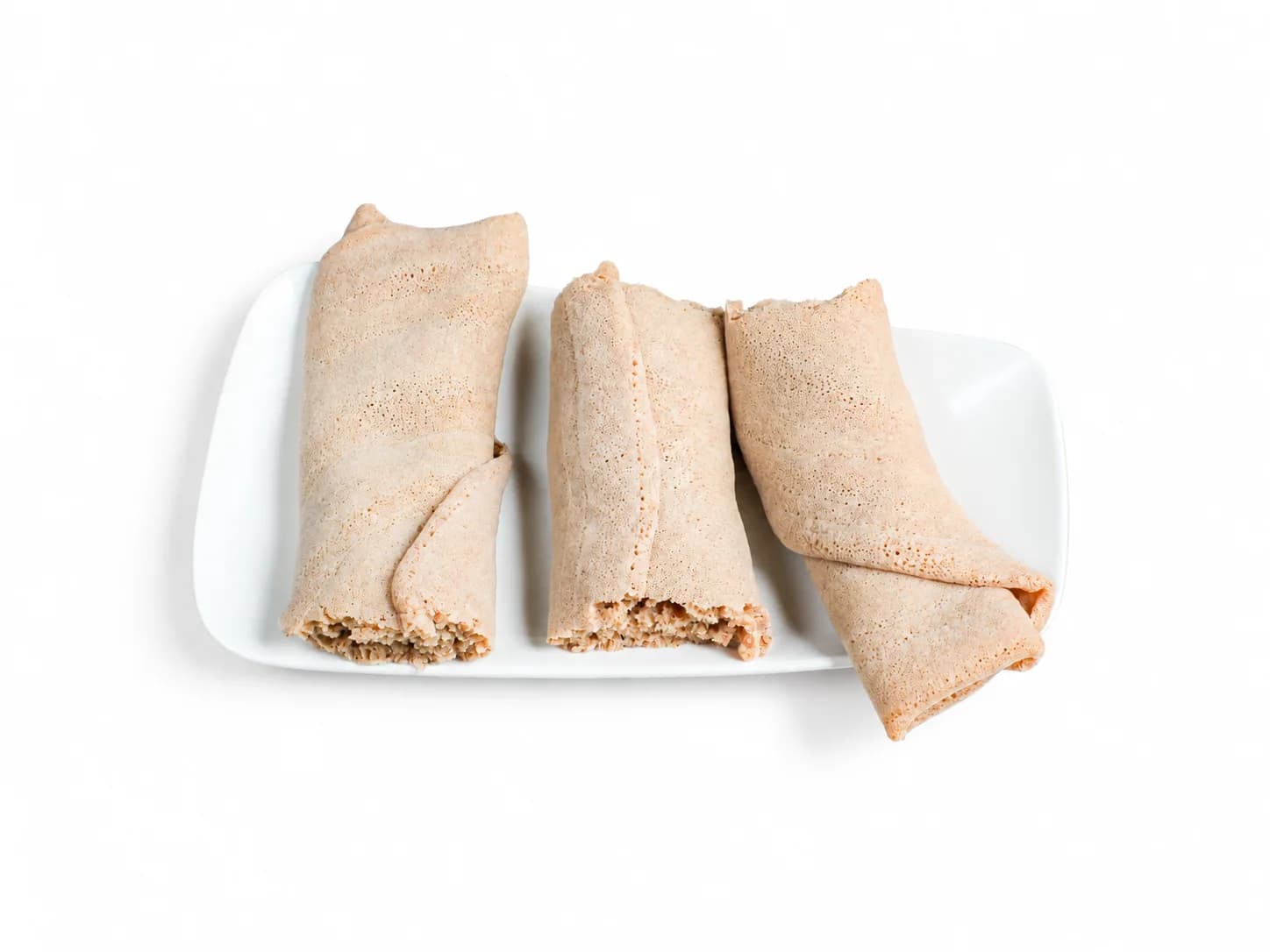
In four steps
How to eat
Tear off a piece of injera with your right hand.
Use it to gather some of one of the dishes - without dipping your fingers into the sauce.
Eat it in one bite.
Carry on at your own pace. There is no order and there are no courses - you work your way across the platter.
Spices
Berbere, mitmita, nitir kibbeh
Berbere is the best-known Ethiopian spice blend: chilli as its base, with fenugreek, coriander, ginger, cardamom, allspice and clove. It is aromatic, not merely hot.
Mitmita is hotter and finer - bird’s eye chilli, cardamom, clove and salt. It accompanies kitfo and raw dishes.
Nitir kibbeh is clarified butter infused with onion, garlic, ginger and spices. It is why many dishes carry an aroma you cannot quite place.
Not everything is hot. Alicha dishes use no chilli at all, working with turmeric and ginger instead. Simply tell us how you like it.
Fasting cuisine
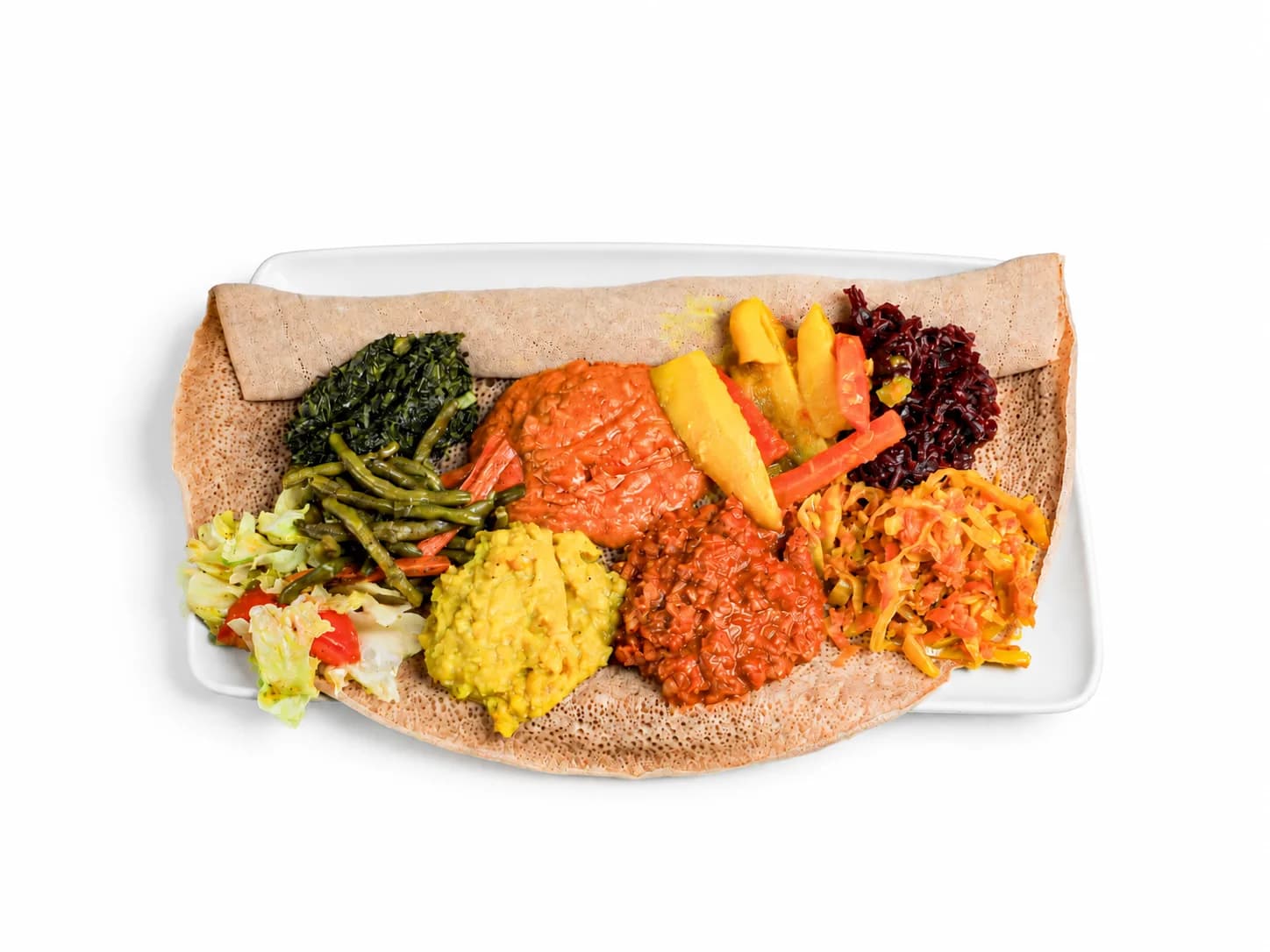
Vegan, for centuries
The Ethiopian Orthodox tradition observes many fasting days on which no animal products are eaten. Over centuries this produced a complete plant-based cuisine - not an absence of something, but a craft of its own.
That is why the vegan platter here is not a special request but one of the centrepieces of the menu.